AI Search vs. Google: Why PR is the New SEO Strategy
PR now directly shapes AI search visibility. Learn how earned credibility, expert quotes, and trusted coverage influence who gets cited in AI-generated answers.

Adam Forziati
The foundations of search engine optimization (SEO) have cracked, and I don’t think they can be repaired. AI-driven tools like ChatGPT, Perplexity, and Google’s AI Overviews have already altered how we search for information – if not permanently, than definitely for the foreseeable future.
That means instead of chasing clicks through keyword stuffing or backlinks, forward-thinking brands need to invest in what truly matters: credibility.
That’s where public relations comes in. AI search tools synthesize answers, and they tend to cite sources that already look credible.
PR increases the chance your brand appears in those answers by earning third-party validation in quotes, reviews, and analysis in trusted outlets, then reinforcing those claims on your own site.
PR’s Role in AI Search: Why Earned Credibility Drives Visibility in 2026
The way users search is evolving rapidly. It is believed that 115 million to 180 million individuals use generative AI tools like ChatGPT daily. That number is expected to grow as these tools become more integrated into operating systems, web browsers, and as a catch-all tool for various workplace activities.
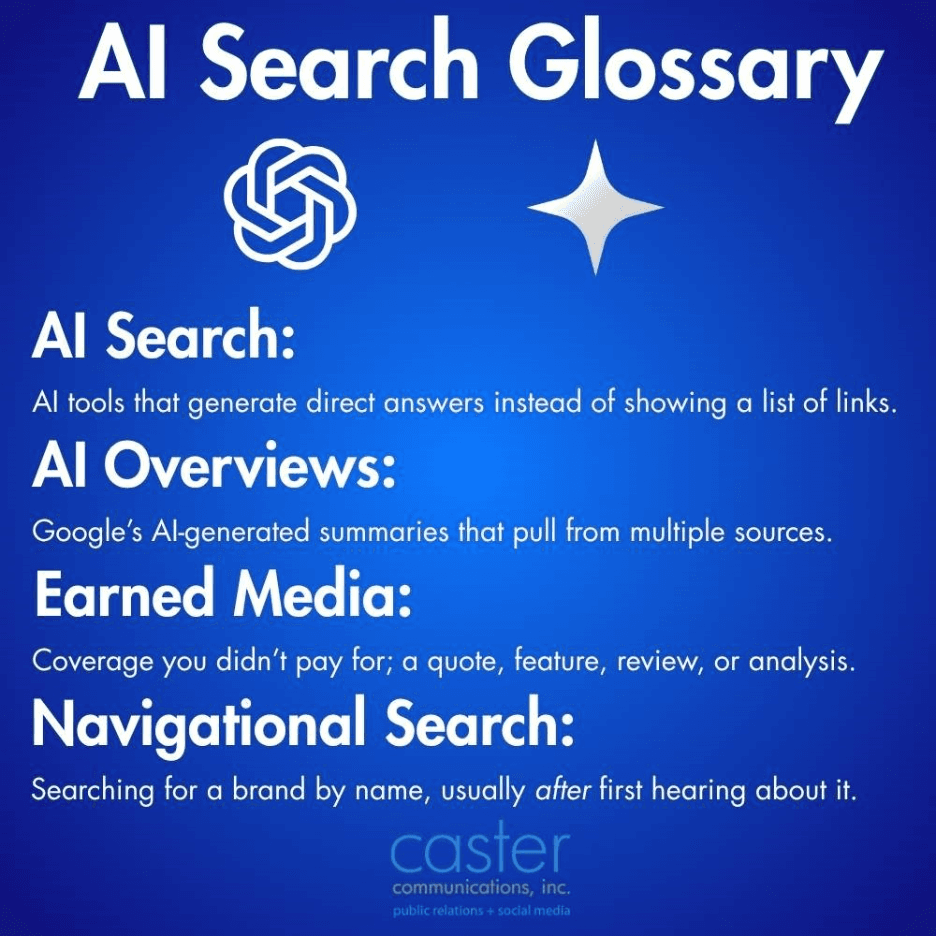
Platforms like Perplexity.ai deliver conversational, cited answers instead of a list of links. Google is now rolling out its AI Overviews across search results, summarizing information from top-ranking sources and reducing the need to click through to websites.
These changes signal a major shift: users want answers, not options.
Personally, I can see how AI became so prevalent so fast. The internet is nothing but options, and even the most optimized, structured data online is negatively impacted by the fact that if something exists on the internet, it probably exists in scores of other places.
To put it in the words of comedian Bo Burnham: “it’s a little bit (a LOT) of everything, all of the time…” so there is no surprise users gravitate to AI tools which sift through the noise to find clear, concise answers to questions (in the interest of staying on point, I’ll reserve my feelings about all this for a separate blog).
Why are Brand Searches Rising (Even in the AI Era)?
While AI search adoption is accelerating, users still turn to Google, albeit in a slightly different way. Now more than ever, when they’re in brand discovery mode, they turn to the world’s most popular search engine for baseline information.
But what they’re searching for is changing.
Recent data from Semrush and SparkToro shows a continued rise in navigational searches; queries like “Notion AI,” “Midjourney pricing,” or “Best Shopify alternatives.”
These queries are brand-specific, and they often occur after a user has seen or heard about the brand elsewhere (on social, in a newsletter, or in an article).
In other words, brand awareness now drives search behavior more than search drives brand awareness.
What Does AI Search Trust and Cite?
Traditional SEO relied heavily on keyword-rich content, backlink campaigns, click-through rates, and page dwell time. But AI models like GPT-4o, Claude, and Gemini are trained to prioritize credibility over clickability.
They’re designed to summarize information from authoritative sources, not regurgitate the most optimized blog post.
Here’s what these systems are trained to trust:
Mentions in reputable media outlets (e.g., Forbes, Wired, TechCrunch)
Expert quotes from industry leaders
Clear brand consistency across platforms
Contextual relevance (brand associated with a topic in multiple places)
This is why earned media is emerging as the new framework for better SEO.
Earned coverage and expert quotes create third-party validation, which gives your brand weight within the broader information ecosystem. When those mentions are consistent across multiple trusted sources and reinforced by clear, structured owned content (press kits, FAQs, product pages), AI systems have an easier time retrieving and summarizing your brand accurately.
The result is better representation, where your brand shows up in the right contexts, for the right questions, with fewer inaccuracies.
How Does PR Influence AI Answers?
If AI search is a conversation, your brand needs to be a part of it—before a user types a query. That’s where PR and social branding step in.
AI search tools pull answers from recognizable, well-cited sources
Consumers ask AI about “best” tools, “top” services, and “trusted” companies
If your brand isn’t mentioned in high-authority places, you’re invisible to AI
This creates a new digital ecosystem where PR builds the trust signals AI uses to decide who’s worth showing in its responses.
At Caster, we’ve seen firsthand how our clients’ AI visibility correlates with their media presence. A single Forbes mention can land a brand in AI summaries for months. Being quoted in a trade outlet can beat out dozens of SEO-optimized blog posts.
How Do You Optimize for AI search and Google at the Same Time?
To thrive in the age of AI search, brands must balance two strategies:
For Google SEO:
Still optimize for core keywords
Maintain technical SEO hygiene (load speed, schema, meta descriptions, mobile UX)
Build topic clusters with high-value content
Strategic internal linking
For AI Visibility:
Prioritize earned media and expert quotes
Work with PR teams to secure thought leadership placements
Maintain consistent messaging across owned and earned platforms
Publish authoritative, trustworthy content that can be cited
Be active on social platforms where brand affinity can be built
I Repeat: PR is the new SEO
The traditional search landscape is evolving. AI tools now deliver answers over links, and the credibility of those answers hinges on your brand’s authority, not your ad spend.
If you want to be seen in the next generation of search:
Get cited by experts.
Get featured in the press.
Build a recognizable brand.
Tell your story across platforms.
And yes, work with PR pros who understand the new rules of the game. In the age of AI, search doesn’t just reward big names, it rewards trusted ones. Any brand applying the right strategy can earn that trust and show up where it matters.