Why Micro-Influencers Often Outperform Big Names
Follower count is only part of the story. This guide explores why micro-influencers often outperform big-name creators and shares practical tips for selecting creators that align with your audience and business goals.

Kaitlin Stallings

Sarah Hales

When you think of an influencer, who do you picture? If I could guess, I would bet MrBeast, Kim Kardashian or another social media personality with millions of followers probably popped into your head. A person who has a very large, even potentially global fame and notoriety in culture.
An easy assumption to make is that a bigger audience automatically equals a bigger impact. But after managing influencer campaigns across consumer technology, smart home, and lifestyle brands, I’ve often found that the creators with the most impressive metrics don’t usually have the biggest audiences.
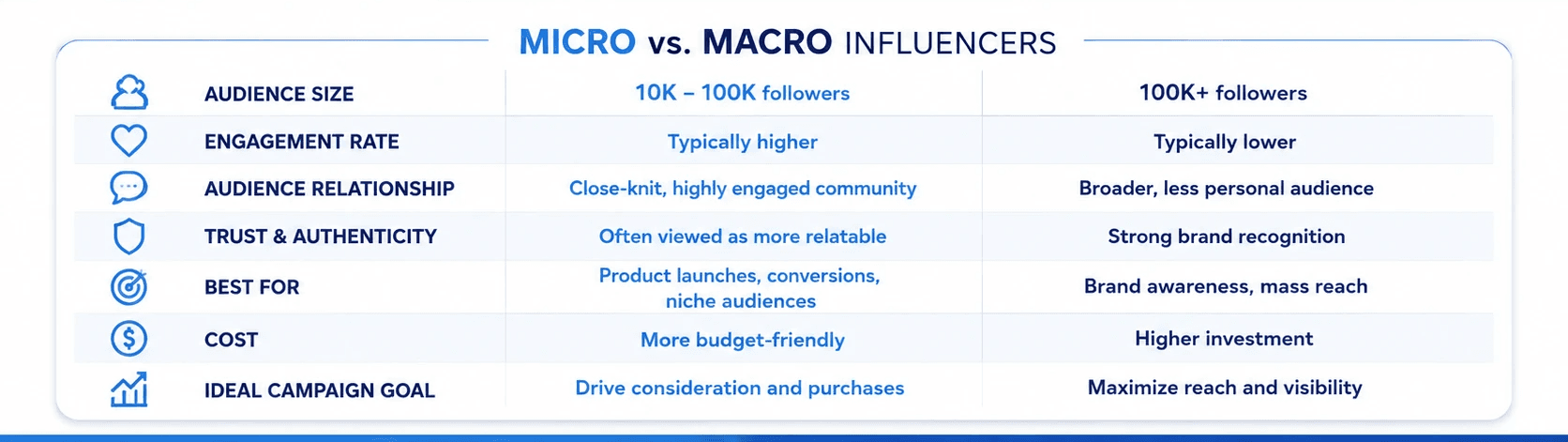
Some of the best-performing partnerships I’ve worked on have been with creators whose smaller, highly engaged communities have been built over years of earning trust. That’s why micro-influencers, creators with 10,000 to 100,000 followers, often deliver stronger results than creators with significantly larger audiences.
TLDR: Micro-influencers often outperform larger creators because their audiences are more specific, more engaged, and more likely to trust their recommendations. While macro-influencers can be useful for broad awareness, micro-influencers are often stronger for brands that want qualified reach, authentic engagement, audience feedback, and measurable action.
Reaching the Right Audience > Reaching the Biggest Audience
Follower count is often the first thing brands look at when evaluating creators, but it's far from the most important metric.
Micro-influencers usually attract their audience with a specific industry, hobby or niche. Their followers don’t stick around simply because they create visually pleasing content. They're engaged with the creator’s content because they have similar interests, trust their expertise, and genuinely value their recommendations. Through sponsored content with the right partner, brands can reach consumers who are already interested in their product or service.
This is especially prevalent in technical industries, where credibility matters. For example, if a brand is launching a new video doorbell, a smart home creator whose audience watches their content for guidance on DIY home installation projects will most likely be a much stronger partner than a general lifestyle influencer who has ten times the number of followers but doesn’t have history posting about smart home solutions. Their recommendation will feel less like an advertisement and more like advice from a trusted friend.
Think of an influencer partnership like a form of paid media: When you partner with a creator, you are effectively purchasing visibility from their audience.
To find the right creator for your brand, ask these questions:
Would our product or service naturally fit into this creator's narrative?
Is their audience based in our target market?
Do their values and content style align with our brand?
The answers to these questions are a much better guide to choosing the right partner than the number sitting at the top of their profile.
Higher Engagement = Better Results
Engagement is where micro-influencers really shine. Their followers don't just scroll past sponsored content. They view the entire video with genuine interest, ask questions, leave thoughtful comments, share their own experiences, and often continue the conversation long after they view the post.
For brands, that kind of engagement can lead to:
Higher click-through rates and conversions
Increased website traffic
Stronger audience trust
Valuable customer feedback
A creator with 25,000 followers who consistently receives quality comments and many clicks can be far more valuable than someone with 500,000 followers whose audience barely interacts with their sponsored posts. That's why it's important to look beyond impressions and reach. The quality of engagement often tells a much more complete story.
Important questions to consider about a creator include:
Does their audience actually take action from their recommendations (refer to previous brand partnership data)?
How has their engagement rate changed over the last 30-60-90 days?
What type of content garners the most engagement (carousel, Reel, static post)?
These answers will help brands identify which creators and which type of content will most likely gain the best campaign results.
More Flexibility = Less Risk
Another advantage of working with micro-influencers is flexibility. Micro-influencers often have smaller rates, so rather than investing their entire budget with one large creator, brands can partner with several smaller creators who each bring a unique audience and perspective. Not only does this strategy help generate more content, allowing brands to test different messaging, creative styles, and audience segments, it also mitigates risk.
If one partnership underperforms (and chances are that one will) there are others to fall back on, preventing the entire campaign from suffering. The performance of each partnership will reveal which creators, audiences, and content formats resonate most with the brand’s target customers. These insights are extremely helpful in understanding what resonates with their target audience and how to optimize future campaigns and improve ROI.
Performance metrics to analyze after the campaign include:
Impressions – total views
Reach – number of unique viewers who saw the content
Engagements – platform-specific reactions
Engagement rate – total engagements divided by impressions
Click Through Rate – compares clicks on the content against the number of times it was seen
Cost Per Click – advertising cost divided by number of clicks
Return on Ad Spend – revenue from an ad divided by its cost
Measuring the Influencer Relationship
One of the biggest mistakes brands can make is treating every influencer campaign as a one-time transaction. Creating one piece of content without the risk of a larger investment can make this path attractive to decision makers, especially when they are managing a limited budget.
But building long-term relationships with creators should be the goal. If budget permits, test three to five pieces of content to give the creator the artistic room to shine.
After each campaign, brands should evaluate whether they should continue a partnership with the creator by asking questions like:
Did the creator's audience genuinely engage with the content by watching the entire video, leaving insightful comments and clicking on links?
Did the partnership drive website traffic or conversions?
Was the content authentic and aligned with the brand?
Was the creator easy to work with throughout the campaign?
The creators worth investing in aren't always the ones with the highest reach. They're the ones who have a solid relationship with their community and actually inspire purchasing decisions.
Your Goals Matter Most
Macro-influencers can be excellent partners when broad awareness or introducing a brand or product to a large audience is important. But if your goal is earning trust, generating meaningful action and engagement, and reaching qualified consumers, micro-influencers are often the stronger choice.
Remember that in influencer marketing, the most important number usually isn’t how many followers a creator has. Look at data and trends such as brand fit, audience demographics and interests, engagement rate, and best performing content formats.
At Caster, we help brands identify the right creators, build authentic partnerships, and develop influencer programs that support measurable business goals. To learn more about our influencer marketing and social media services, visit our Social Media page or reach out.