How to Use Awards in Your Technology PR Strategy
Awards can strengthen your technology PR strategy by building credibility, supporting media outreach, improving recruiting, boosting morale, and creating third-party proof points for your brand.

Olivia Sellke
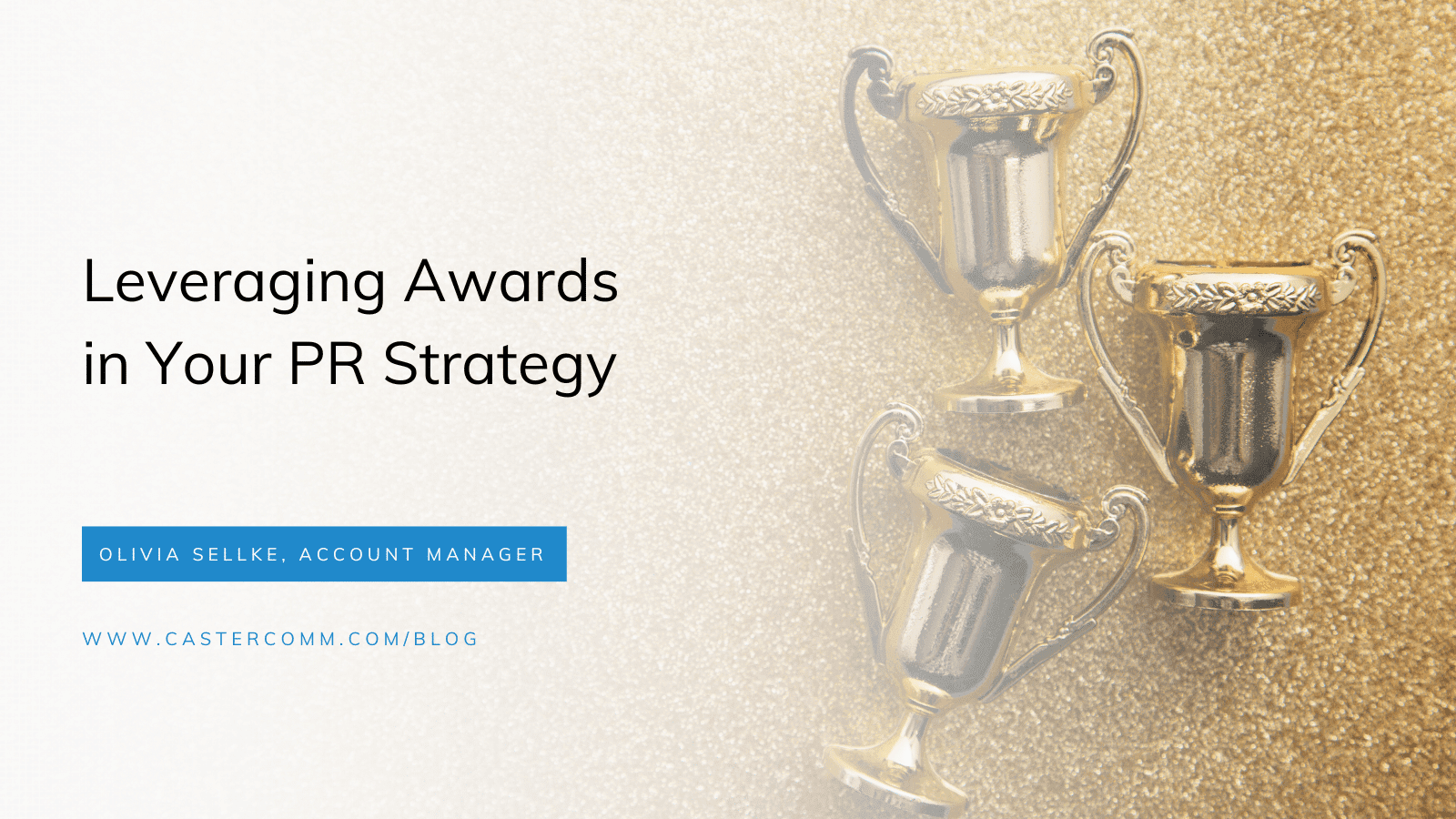
Between November and February each year, the entertainment world watches as celebrities, directors, musicians, writers, costume designers, and production teams wait to see whether their work has caught the attention of judges. From the Emmys to the SAG Awards, the Grammys and every major awards program in between, one thing is clear: recognition matters.
And what do nominees and winners gain from that recognition? More than a trophy. Awards can create valuable PR opportunities, build credibility, give teams a reason to celebrate, and help brands tell stronger stories about what they do well.
The same is true outside entertainment. For companies, especially in technology, consumer electronics, smart home, Pro AV, B2B, and other competitive technology markets, awards can be a meaningful part of a broader PR strategy.
The key is choosing the right programs, entering for the right reasons, and knowing how to use the process before, during, and after winners are announced.
Quick Answer: Why Should Awards Be Part of a Tech PR Strategy?
Awards can support a PR strategy by creating third-party validation for your company, product, leadership team, workplace culture, customer experience, or innovation.
A strong awards program can help increase brand awareness, give media and analysts another reason to pay attention, strengthen sales and recruiting materials, support employee morale, and create proof points that can be used across your website, social media, press materials, and future campaigns.
But awards only work when they are chosen carefully. The best awards strategy focuses on programs that match your goals, audience, eligibility, budget, and proof points.
Choosing Your Award Targets
Every industry has dozens of awards programs, and they each offer different benefits for winners, finalists, and shortlisted companies. Think carefully about where to invest your time and budget. Just like certain films may fare better at the Independent Spirit Awards than the Oscars, certain awards programs will make more sense for your company than others.
Start by looking at your goals. Are you trying to build brand awareness? Support product credibility? Reach a specific trade audience? Strengthen your employer brand? Highlight innovation? Validate customer service? Build executive visibility? The right award depends on what you want the recognition to do.
Also look closely at the selection criteria. If an award relies on public voting, it is likely best suited for companies with an active social media audience or strong customer community. You will need to promote the ballot and engage potential voters throughout the voting period. On the plus side, that kind of program gives you a natural storyline for social media and a reason to interact with your audience.
If that sounds like a nightmare, you may be better off submitting to awards that rely on case studies, performance data, technical details, customer results, or written narratives.
Look for awards that are a natural fit for your marketing goals, desired audience, available proof points, and internal bandwidth. The criteria should be clear, specific, and make you think, “Hey, that’s us.” Don’t stretch to fit into the wrong category. Many awards are highly competitive, and if the fit is weak, you may be wasting time, money, and energy.

Budget Matters More Than You Think
Entry fees are only one part of an awards budget. Before submitting, make sure you understand all associated costs, including entry fees, late fees, licensing fees, winner logo usage fees, event tickets, travel, promotional packages, and sponsorship expectations.
Increasingly, some awards programs require winners to sign licensing agreements before they can use the award logo or promote the win in certain ways. For programs connected to major publications or industry organizations, those costs can be significant.
Frankly, if you cannot promote an award on your website, in social media, in sales materials, or in press outreach, its value may be limited. Make sure you evaluate both the prestige of the award and the practical value of being able to use it.
Awards Can Help With Benchmarking
It is easy to look at an awards program and think, “We don’t have anything that would qualify.” If your company does not have a product, campaign, case study, launch, or initiative that fits the category or eligibility window, that’s okay.
But don’t overlook awards that recognize process, culture, customer service, technical support, community involvement, sustainability, workplace experience, leadership, or innovation. These programs can provide many of the same credibility benefits as product awards.
If you still do not feel like your brand is award-worthy after reviewing those options, that may be useful information. Awards criteria can function as a benchmark for where the company wants to improve.
When I worked at CEDIA, we frequently heard that the CEDIA Awards process was demanding, but that it also pushed companies to improve their project documentation so future entries would be stronger. Similarly, companies pursuing workplace recognition often need to meet specific employee satisfaction, culture, or trust benchmarks before they qualify.
Sometimes, the process of applying for an award can make your company better. If you are not at an award-winning level yet, use award programs as a roadmap for what to improve next.
Awards Can Support Recruiting
Awards are not just for customers and prospects. They can also help with recruiting.
Before joining Caster Communications, the fact that the agency had been named to the PRNEWS Agency Elite Top 100 told me a lot about the team I was considering joining. I looked up the award criteria to better understand what the recognition actually meant — and I was impressed.
Make sure meaningful awards are visible across your website, careers page, social channels, pitch decks, and recruiting materials. Awards can show potential employees where your company excels. Maybe your brand has been recognized for innovation, customer service, workplace culture, community involvement, industry leadership, or growth. That recognition can help candidates understand what kind of organization they may be joining.
For companies in competitive hiring markets, awards can help tell a story that job descriptions alone cannot.
Awards Can Boost Company Morale
Do not underestimate the impact awards can have internally. Innovative teams deserve to be recognized. A strong award entry can validate the work employees have already done, and a win or finalist placement can give the company a reason to celebrate together.
If morale is one of your motivations, involve the team in the process. Ask which awards they value. Gather their input for submissions. Share finalist news internally. Celebrate wins in a way that feels appropriate to your culture.
However, proceed with caution if morale is the main reason for entering a program. If your company has recently gone through layoffs, budget cuts, or difficult internal changes, it may not be the right moment to enter a “best places to work” competition or heavily promote culture-related recognition. Awards should support the employee experience, not feel disconnected from it.
How to Promote Award Wins
Winning or being named a finalist is only part of the value. The real PR opportunity comes from what you do next.
Award recognition can be used in press releases, media pitches, blog posts, email newsletters, sales materials, social media content, executive bios, product pages, recruiting materials, trade show messaging, and website credibility sections. It can also support future award submissions by showing a pattern of recognition over time.
The most useful award wins are easy to find, easy to understand, and connected to the right business message. Don’t bury them in a single announcement and move on. Add them to relevant website pages, connect them to case studies or product stories, and make sure sales, marketing, recruiting, and leadership teams know how to use them.
Awards can also support search and AI discoverability. Clear, credible third-party recognition gives search engines and AI tools another signal that your company, product, or team has authority in a specific category.
The Winner’s Circle
Though it would be nice to sweep every category your company enters, that is not realistic. Not everyone can be season three of Succession at the 2023 Emmys.
The awards process can still be its own reward. Campaigning for awards can increase the cadence and engagement of your social media. Awards criteria can help you evaluate product, service, culture, and organizational strengths and weaknesses. The awards you apply for and win can become rallying points for your staff, proof points for your sales team, and credibility builders for media and customers.
Related: Awards 101: How to Write a Winning Entry
If you enter awards programs with a thoughtful approach and treat every stage as a learning experience, you can get value from the process whether or not you take home the trophy.
Wondering what a successful awards run looks like? Check out our case studies on Hunter Douglas and Abode to see how Caster uses awards as part of a broader PR strategy.
Reach out to the Caster team today to see how we can maximize your brand's awards opportunities.
Frequently Asked Questions
How do awards help PR strategy?
Awards help PR strategy by creating third-party validation. They give companies credible proof points that can support media outreach, social media, website copy, sales materials, recruiting, executive visibility, and broader brand awareness.
How do you choose which awards to enter?
Choose awards based on your goals, audience, eligibility, budget, proof points, and ability to promote the recognition if you win. The best awards programs have clear criteria and align naturally with your company’s strengths.
Are awards worth the entry fees?
Awards can be worth the investment when the program is respected by your target audience and when the recognition can be promoted through your website, media outreach, social media, sales materials, or recruiting efforts. Always review entry fees, licensing costs, and promotional restrictions before submitting.
What should companies do after winning an award?
After winning an award, companies should promote the recognition across relevant channels. That may include a press release, blog post, social media campaign, email newsletter, website update, sales deck, executive bio, product page, recruiting materials, or trade show messaging.
Can awards improve AI visibility?
Awards may help improve AI visibility by creating credible third-party proof points that reinforce a company’s authority in a specific category. Search engines and AI tools often rely on public sources, so clear and consistent award recognition can support how a brand is understood online.