Don’t Get a CES Hangover: Turn Your January Launch Into Year-Round Momentum
Got CES buzz? Keep it. Use this 90-day momentum plan to turn a January launch into sustained coverage.

Alex Crabb
President
Every December, our phones light up like the Vegas Strip: “We need CES coverage!” “Can you get us meetings with TechCrunch?” “We’re launching at CES and want to meet press, but we only need an agency for CES.”
Here's what typically happens: you get some great press meetings. A few big stories run. Lots of promises about future coverage. But by Valentine's Day, that game-changing product launch is yesterday's news.
This is one of the most expensive mistakes in tech PR.
CES is Your Starting Gun, Not Your Finish Line
Too many brands treat CES like it's the entire race. They invest heavily in their January debut, add some media quotes to their website, share a few LinkedIn posts, and then go quiet. Meanwhile, the smartest companies are using CES as a springboard to own the first half of their year.
The latter understands something fundamental: Media relationships aren't transactional. They're ongoing conversations that need constant nurturing.
Building Your 90-Day PR Momentum Plan
The real value of CES comes after the show floor closes. Those editors who stopped by your booth aren't writing about your launch anymore, but they might cover your customer case study in March or your partnership announcement in April. They may want your thought leadership on topics that you discussed on the show floor.
The key is having something meaningful to share that builds on the discussions you started at the show.
Here's what actually drives sustained media coverage:
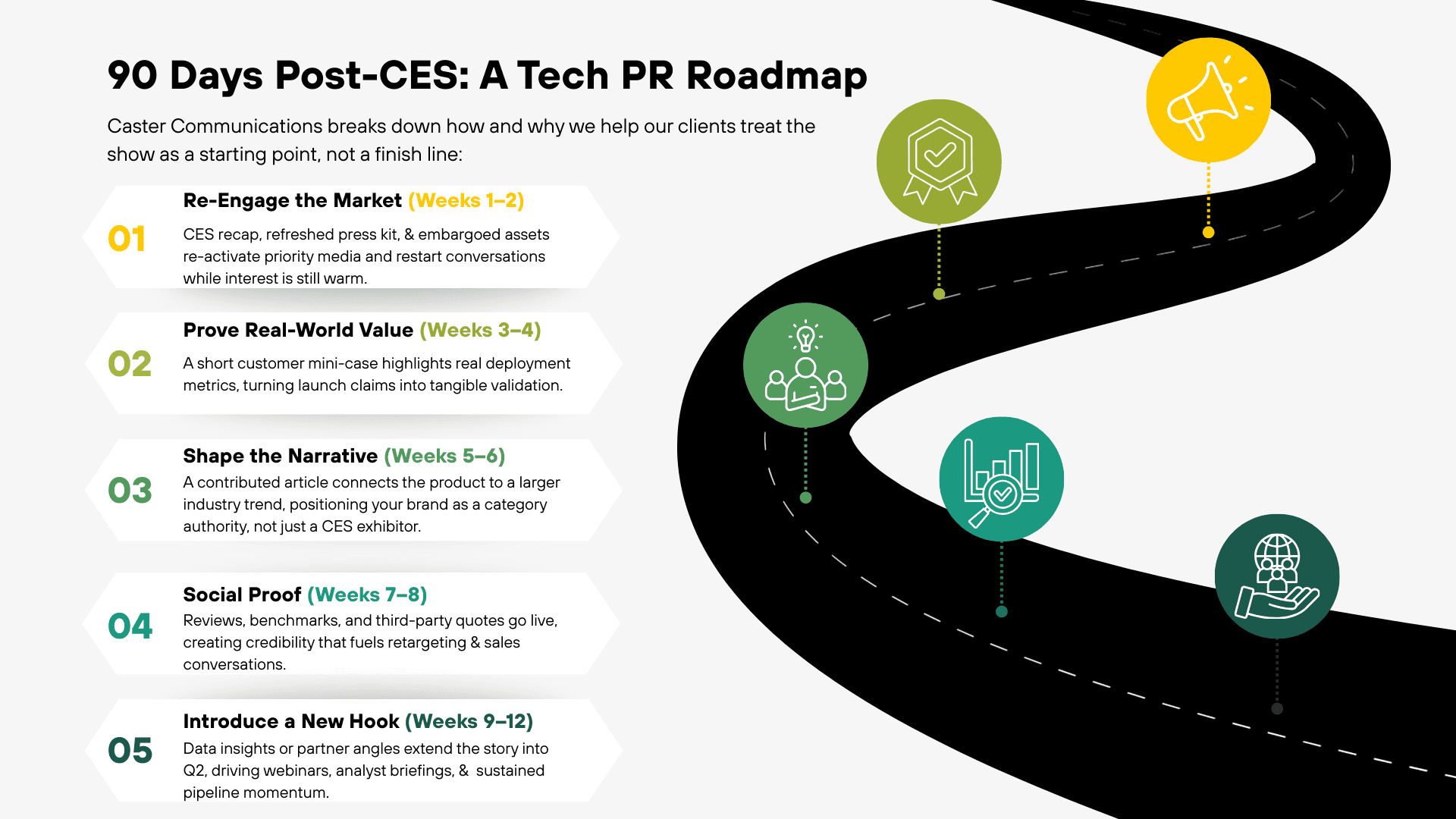
Case Studies That Matter: Your CES prototype becomes a customer success story. Those real-world proof points transform trade show buzz into validation that journalists and customers care about.
Contributed Content: Position your executives as thought leaders by translating your CES innovation into industry insights. That AI breakthrough becomes an article about manufacturing efficiency. Your new sensor technology? Perfect for an industry publication's expert column.
Product Reviews: The review cycle takes 60-90 days. Smart brands seed products at CES for reviews that publish when Q1 buying decisions are being made, not when everyone's still recovering from Vegas.
Strategic Follow-Through: Fresh hooks and angles that keep journalists engaged. Maybe it's a new application for your technology, a market trend you're addressing, or data that validates your CES announcement.
Why Consistency is Your Competitive Advantage
AI-powered search engines are changing how brands maintain visibility. Your company can quickly rise to the top of AI search results, but only consistency keeps you there. Every week without fresh content is a week your competitors can claim your position.
The shotgun approach to PR doesn't work anymore. Algorithms reward sustained relevance over one-time spikes. It's not about being loudest in January. It's about being present and relevant throughout the year.
Creating a post-CES momentum strategy doesn't require you to double your budget. It requires planning and discipline. The brands that succeed don't just show up at CES. They show up every week after, earning credibility one story at a time.
90 Days Post-CES, Visualized
The Bottom Line
If you're investing in a CES presence only to go dark in February, you're essentially paying premium prices for temporary attention. Your competition isn't taking Q1 off. Neither should your communications strategy.
CES opens doors. What you do afterward determines whether those doors lead anywhere meaningful.
Before you head to Vegas, ask yourself: Do you have a plan for post-show? Because relevance isn't something you establish once. It's something you build consistently, one quarter at a time.
Want to turn your CES moment into sustained momentum? Let's talk. I'm happy to meet with you at CES to brainstorm post-show plans. Reach out to schedule a connection: alex@castercomm.com
Next Read: Guide on AI Search vs. Google SEO to understand why consistency is your new competitive advantage.