My First CES: What Supporting Exhibitors Taught Me About Tech PR
A first-time look at CES through the lens of tech PR, from supporting exhibitors to navigating the show floor and building real connections.
Kaitlin Stallings
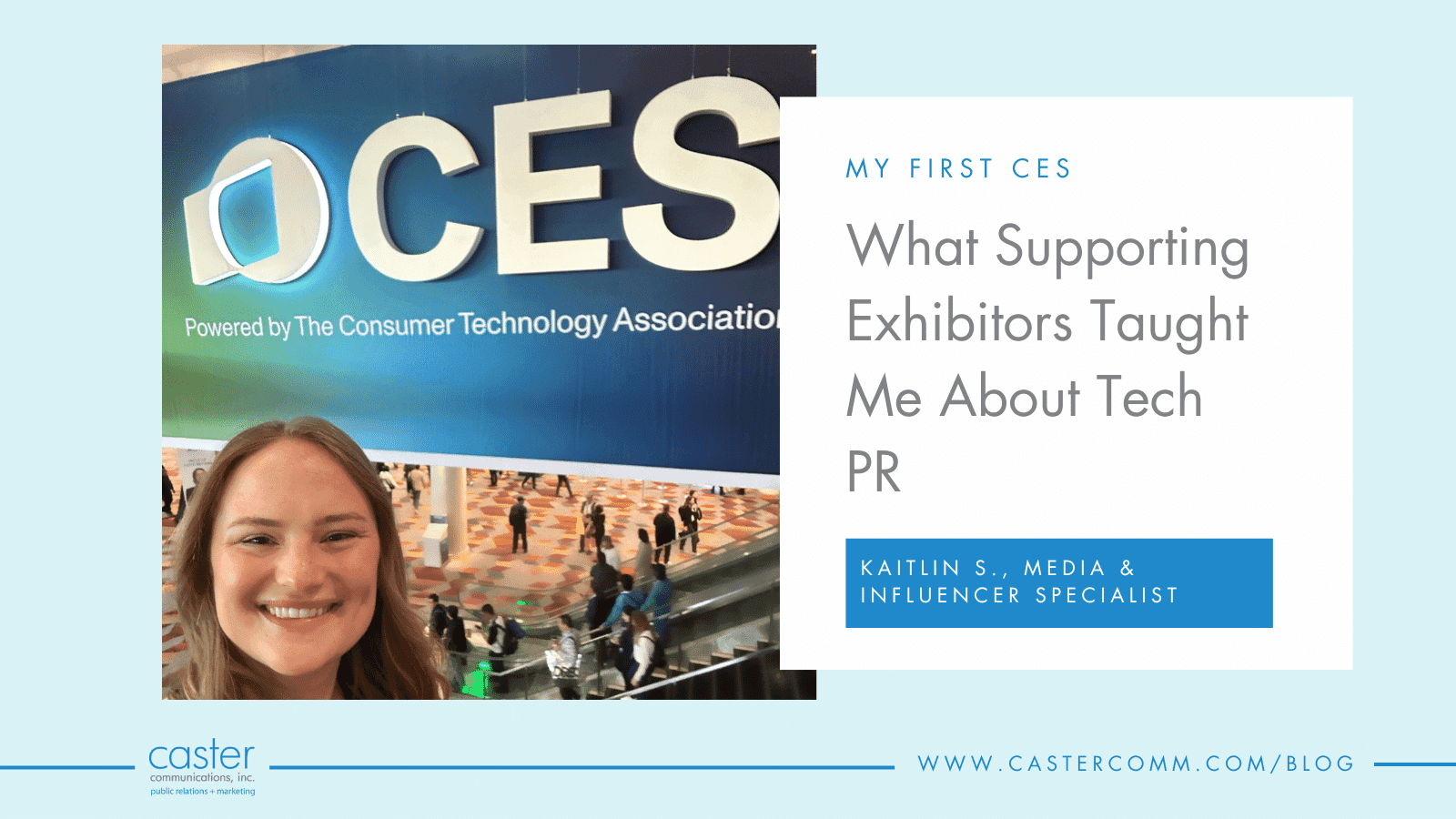
This year is my first year in tech PR, which also meant it was the first time I experienced CES.
The show is massive in every sense of the word. The miles walked before noon; the meetings stacked back-to-back; the blur of lights, logos, and days that start early and end late. It doesn’t ease you in. It drops you straight into the deep end and expects you to keep up.
This was my first CES, and I experienced it from a unique vantage point. I was supporting two clients who were exhibiting, which meant I didn’t just walk the show floor, I lived inside it. I saw firsthand what it takes to show up as a brand at CES, how much planning goes into every meeting and demo, and how much pressure (and opportunity) exists in one very intense week.
Experiencing CES as an exhibitor
Being at CES with exhibiting clients shapes your experience. You feel the stakes immediately. You learn how critical preparation is and how important it is to know your client’s story.
You are part of the machinery that keeps the booth moving, the conversations flowing, and the momentum alive. And yes, make sure to scan that badge. Every interaction matters, whether it’s a scheduled media meeting or a spontaneous stop-by that turns into something more.
This is the side of CES most attendees never see, and it’s where PR work is constantly happening in real time.
Walking the show floor (a lot of it)
I also made a point to walk, a lot. My first day at CES, I clocked 17,000 steps. Yes, you read that correctly.
Over the week, I covered nearly every area of the show floor, from the large, polished halls with massive brand activations to the more intimate corners of the show. Each area had its own vibe.
The main halls delivered scale, production, and interactivity at a level that’s hard to replicate anywhere else. Booths weren’t just displays; they were experiences, designed to pull you in and hold your attention.
Seeing that range up close reinforced how intentional CES booth strategy has to be and how closely storytelling, design, and PR execution are linked.
Where the energy shifted: Eureka Park
Eureka Park stood out immediately. The energy was different — louder, scrappier, more personal. This was where startups showed up with big ideas and limited space, where founders explained their products with pride, and where ambition was tangible.
Teams had poured everything into being there, hoping this week might help change the trajectory of their company. It was exciting, motivating, and honestly refreshing. I highly recommend spending time in this area, because you never know what new product you’ll discover.
Being able to talk directly with founders and creators and hear their stories firsthand is what makes it so unique.
The technology really is impressive
There was no shortage of exciting emerging tech. AI, robotics, smart home innovation, safety-focused tools. CES is very good at reminding you just how fast things are moving.
The scale and interactivity were impressive across the board. The production value alone makes CES unlike any other trade show.
But even surrounded by all of that, something else stood out more.
What actually made the difference
What stayed with me most wasn’t a booth or a demo. It was the people.
I met journalists, attendees, and exhibitors from all over the world. I spoke with people who had been attending CES for decades and others who were there for the very first time (like me). I had conversations that started as quick introductions and turned into thoughtful exchanges about the industry, my clients’ products and activations, and what it’s like to launch products in countries all around the world.
As someone who loves connecting with people, that matters. And as a PR professional who often communicates through a computer screen, it was incredibly refreshing. I was reminded that coverage doesn’t come from flashy pitches alone. It comes from listening, understanding what someone cares about, and building real rapport. Interesting conversations lead to real outcomes.
I made connections for myself, relationships I know will last beyond CES, and I helped my clients earn coverage through genuine conversations.
The real takeaway
CES can be overwhelming and absolutely overstimulating. It’s loud, crowded, and relentless. But at its core, it’s still deeply human.
It’s people meeting people. It’s stories being shared face to face. It’s ideas being challenged, refined, and understood in real time.
That was the biggest takeaway from my first CES: even in a room filled with the most advanced technology in the world, human connection still carries the most weight.
Technology may be the reason everyone comes to CES.
Relationships are the reason it works.