Integrated Systems Europe (ISE) 2026: Daily Coverage, Key Trends, and Product Announcements
ISE 2026 is set to be the largest and most globally influential edition yet, spotlighting AI, smart spaces, cybersecurity, and design-led AV innovation.
Caster Communications
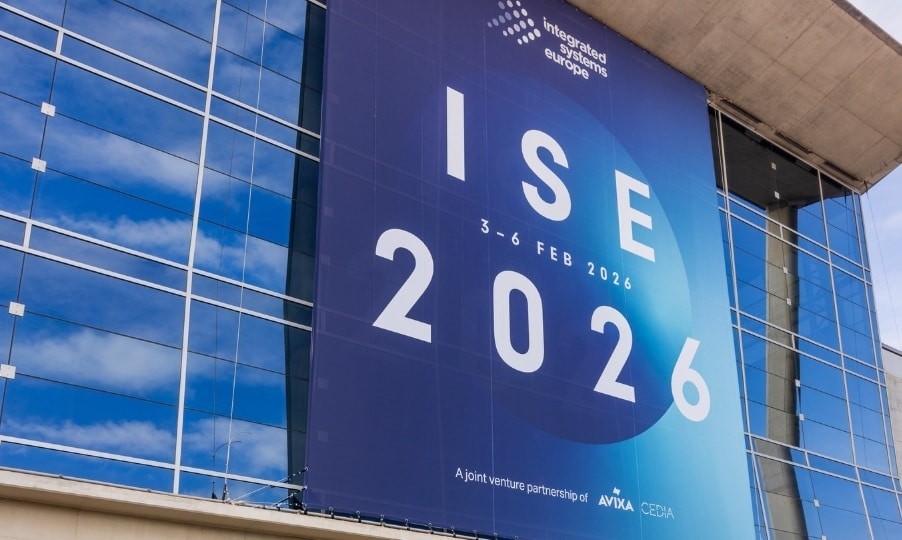
This page serves as Caster Communications’ live coverage hub for Integrated Systems Europe (ISE) 2026, bringing together daily analysis, product announcements, and industry trends from the show floor in Barcelona. Updated throughout the week, this rolling report highlights the signals that matter most for integrators, manufacturers, and enterprise AV leaders. Latest update: 2/6/26 1:45pm EST.
What you’ll find in this ISE 2026 coverage:
Daily ISE news highlights and show-floor analysis
Major product announcements and platform updates
Emerging trends across AV, IT, AI, and collaboration
Media coverage and reporter highlights
Post-show takeaways and strategic follow-ups
What to Watch at ISE 2026 (Monday, Feb. 2)
As the AV industry’s biggest global trade show prepares to open its doors tomorrow in Barcelona, early signals from media, exhibitors, and thought leaders point to a high-impact, high-velocity week ahead at Integrated Systems Europe (ISE) 2026.
From expanded content programs and in-demand trends like AI and convergence to major product news from keynote exhibitors, there’s already momentum for industry stakeholders to start thinking in terms of signal over noise before the show floor opens.
Interesting Pre-ISE Announcements
Even before opening, ISE 2026 has seen an influx of official news releases and partner previews that set expectations for what’s to come. The show’s organizer has published a slate of compelling teasers, from drone light shows over Barcelona to expanded Innovation Park programming connecting startups with investors, and a renewed, larger-than-ever content program including Megatrends sessions on AI, cybersecurity, robotics, smart spaces, and more.
Among exhibitors actively previewing what they’re bringing:
Crestron has already signaled key technological priorities for ISE. The company’s ISE preview highlights platform-native conferencing, AI-powered audio/video, and intelligent automation, indicating a focus on seamless UC experiences and unified systems that blur lines between installed AV and modern enterprise workflows.
Vanco has been actively featured in AVNation’s “Road to ISE 2026” series, sharing early insights into what the company plans to highlight at booth A300 in Hall 2. That includes new distribution technology and updated video signal routing solutions, signaling continued emphasis on integrator-friendly systems that support modern AV infrastructures.
Early Media Narratives
Even before the official opening date, industry media outlets have framed the narrative around ISE 2026 as biggest yet in both scale and strategic relevance:
UC Today recently published an interview with ISE Managing Director Mike Blackman emphasizing AV/UC convergence and the show’s shift toward real-world deployment discussions that prioritize interoperability, security, and strategic outcomes, not just product specs.
CE Pro frames ISE 2026 as the industry’s most globally representative AV and smart-spaces gathering to date, highlighting record scale (1,700+ exhibitors, 100,000+ sq. meters), expanded residential and smart-space relevance, and a growing focus on design-driven integration, AI, and cybersecurity as forces shaping where the market is headed next.
AV Network has put out “ISE Insiders 2026” Q&As giving early voice to trends like scalable unified collaboration and real-time AI captioning, hinting at what stories reporters may be chasing once the show begins.
How to “Read” ISE This Year (Hype vs. Signal)
There’s always a tension at big trade shows between the show floor spectacle and real strategic signals. Here are the key filters you should apply in assessing what matters this year:
AI: Emphasis on Practical Over Buzz
AI will be (already is?) everywhere, but in this slice of the tech industry, the narrative is shifting toward real implementations rather than nebulous buzzwords. Look for demonstrations tied to measurable outcomes (automation, efficiency, analytics) versus flashy feature headlines.
Convergence: AV + IT + UC
Media preview conversations and official ISE content strategy show convergence is already a core storyline. Stories that bridge AV technology with enterprise IT and collaboration workflows will resonate more deeply with attendees and readers alike.
Interoperability & Standards
With networking, software-defined systems, and cross-platform solutions becoming foundational, how technologies talk to one another will be clearer in conversations with exhibitors and buyers this week. This reflects the broader industry shift highlighted by analysts: ecosystems over standalone hardware.
Experience & Immersion Over Specs
Immersive experiences and user engagement — whether through LED innovations, audio/visual environments, or integrated workflows — are becoming markers of value, not just performance specs. The industry narrative is increasingly about impact, not just capability.
Day 1 at ISE 2026: Crestron, AI, and Data-Driven AV (Tuesday, Feb. 3)
Ahead of ISE 2026, Crestron brought customers and partners together in Barcelona for its invitation-only True Blue Summit, an evening designed to set the tone for the week through strategic conversation rather than product announcements. Hosted at Spotify Camp Nou, the event focused on collaboration, innovation, and the evolving role of intelligent technology in large-scale environments.
Crestron True Blue Summit Recap
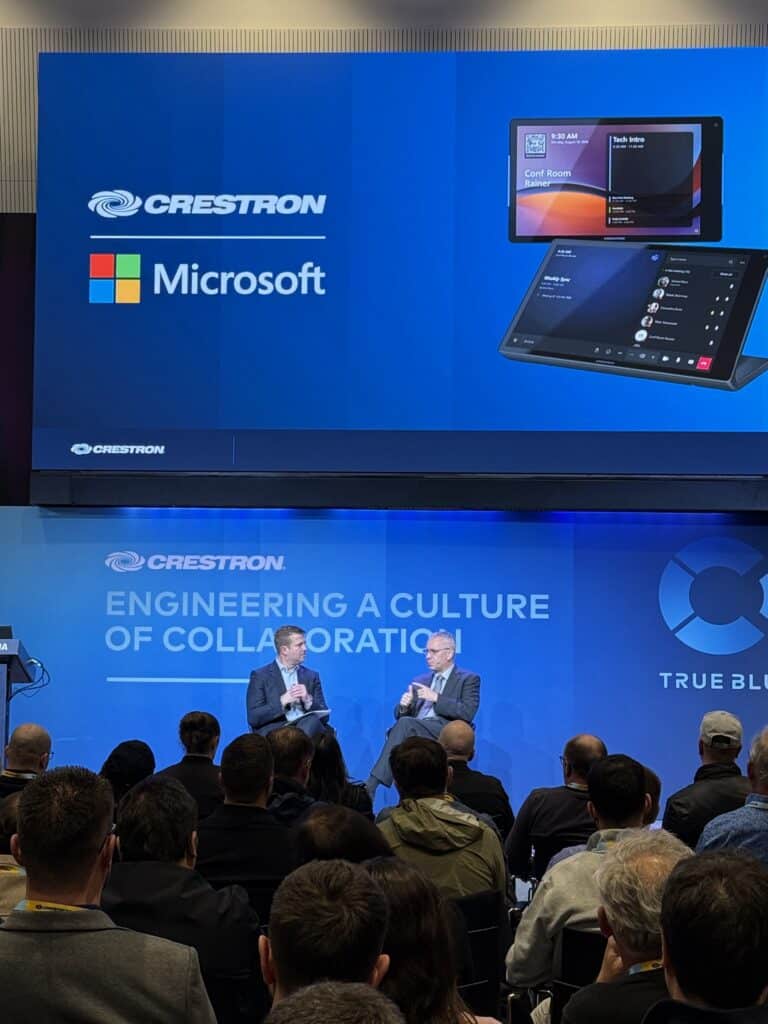
Ahead of ISE 2026, Crestron brought customers and partners together in Barcelona for its invitation-only True Blue Summit, an evening designed to set the tone for the week through strategic conversation rather than product announcements.
Hosted at Spotify Camp Nou, the event focused on collaboration, innovation, and the evolving role of intelligent technology in large-scale environments. Crestron executives were joined by leaders from Microsoft, who shared perspectives on how AI and collaboration platforms are shaping the future of enterprise communication.
Throughout the evening, discussions emphasized the importance of intuitive, scalable solutions that prioritize user experience, reliability, and data-informed decision-making — reinforcing Crestron’s position as a platform partner focused on long-term outcomes, not just individual technologies.
AI Beyond Buzzwords: Real Implementations
ISE organizers are positioning AI as the defining force across the show floor this year, promising it will be everywhere and unlock groundbreaking new solutions. So far, though, the reality feels more evolutionary than truly disruptive. What we are seeing is AI moving beyond software and into physical, hardware-driven implementations (similar to the wave of physical AI that filled CES halls with robotics).
At ISE, that shift is showing up through hardware solutions like AI-powered cameras, displays, collaboration hubs, digital signage systems, and meeting room platforms. AI is becoming part of the AV infrastructure itself, and we’ll likely see that extend further into the smart home throughout the week.
Security, Governance, and the AI Conversation Gap
One of the most anticipated moments may be Sol Rashidi’s keynote tomorrow, where she is expected to address what it really takes to scale AI responsibly across industries. A major gap at CES was the lack of focus on governance, security, and real-world safeguards.
Most conversations were centered on what AI can do, not how to protect it. That’s why it stood out that companies like Caster’s own client Nagravision/Kudelski Labs were among the few showing real edge AI threat models and security solutions, highlighting an area that still feels underrepresented across the broader AI conversation.
On the product side, some of the most practical examples so far include AI-enabled PTZ cameras like Marshall Electronics’ new subject-tracking series, which uses facial learning to keep focus on the speaker. There is also clear interest from integrators in how AI can make day-to-day work easier and reduce operational friction.
Tools like D-Tools’ new AI assistant, designed to generate quotes, adjust system wiring plans, and manage project schedules and inventory, feel less like hype and more like an immediate business advantage. The momentum is real, but the most groundbreaking impact may still depend on whether the industry can match innovation with security, governance, and scalable implementation.
We Know You’re There: Sensor-Driven AV
In an executive Q&A with the ISE Show Daily, AVIXA CEO Dave Labuskes predicted we would begin to see AI leveraged to power more immersive and personalized experiences. The show floor is certainly awash in AI, but a lot of industry R&D has focused on invisibly improving system performance (e.g auto-framing and tracking, emerging display technologies), facilitating management, and mediating human language (e.g. real-time translation, note-taking, and subtitles). Where’s the fun stuff?
In fact, a couple of sensor-driven AI solutions have caught our attention. In stand 2E130, Bluesound is offering an intelligent, sensor-driven soundscaping solution that reacts to occupancy and noise levels in real time to create tailored aural environments for healthcare, corporate, or hospitality settings. Meanwhile, Modulo-Pi (Stand 5F220) continues to bring the fun with an interactive projection demo driven by 2D and 3D LiDAR.
These applications are a reminder that real-time data collection and edge compute power are prerequisites for the kind of immersive, personalized AV Labuskes is forecasting. Solutions that can use sensors to gather user data and process it in real time are starting to produce real magic.
Early Coverage, Awards, and Signals from the Show Floor (Wednesday, Feb. 4)
As the show floor opened and coverage accelerated, Day 1 at ISE 2026 began to separate early signal from spectacle. Media narratives, opening remarks, and industry recognition all pointed to a show defined not just by scale, but by maturing priorities around integration, interoperability, and deployable innovation.
Commercial Integrator and CE Pro positioned this year’s event as a convergence point for commercial and residential integration, reinforced by record growth (1,750+ exhibitors, 101,000+ square meters) and an increasingly global attendee mix.
In his opening press briefing, ISE Managing Director Mike Blackman set the tone with a call to “Push Beyond,” emphasizing ambition not just in show size, but in how the industry thinks about creativity, collaboration, and real-world deployment. Expanded Innovation Park programming, the debut of Spark as a creative hub, and new summits focused on AI and cybersecurity all reinforced that message, signaling a shift from isolated product showcases toward ecosystem-level conversations.
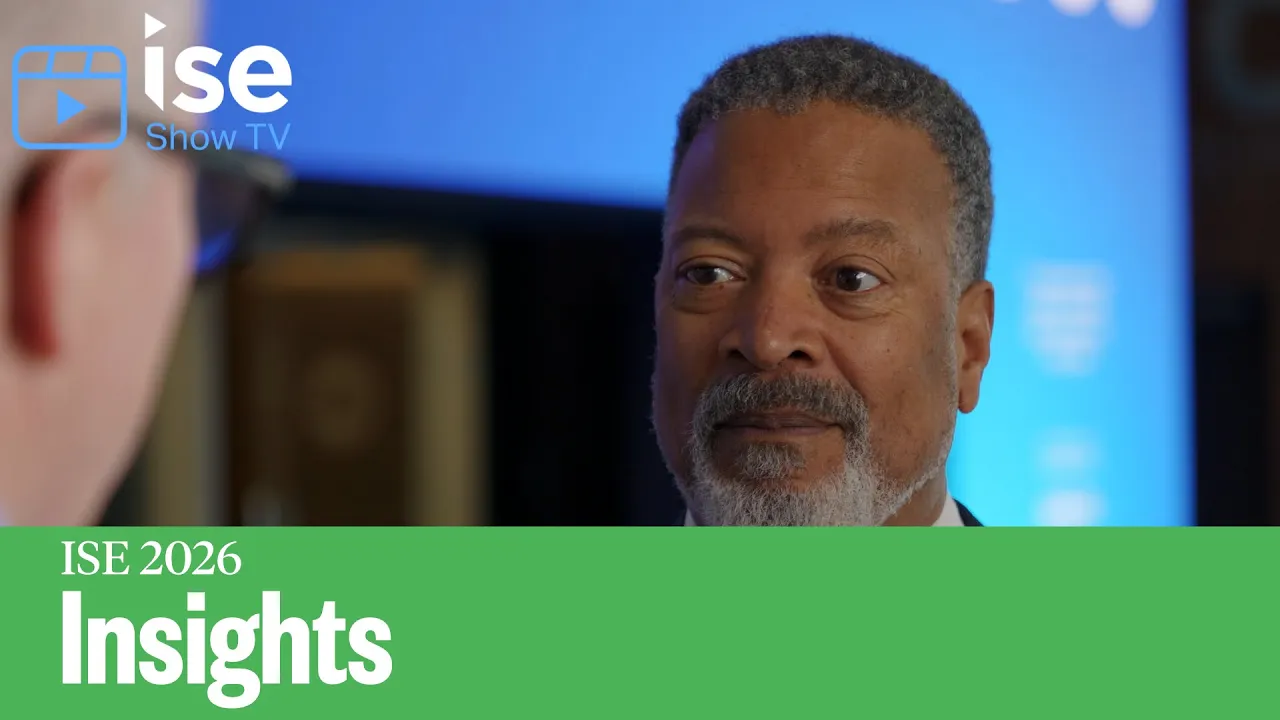
One of the clearest early markers of where innovation is resonating came through the 2026 Top New Technology (TNT) Awards, announced on Day 1 by Commercial Integrator and CE Pro. The awards recognize standout products across both commercial and residential integration — a structure that mirrors ISE’s increasingly blended audience.
Caster client Crestron was recognized with multiple TNT Awards across categories, including:
Crestron 80 Series Touchscreens, honored for delivering purpose-built control across scheduling, unified communications, and room control, reflecting a broader industry move toward interfaces that adapt to how spaces are actually used.
Crestron Automate VX with AutoMeasure, recognized for extending intelligent room design through computer vision and spatial intelligence to simplify camera and microphone placement for high-quality collaboration.
CEVO Mini Remote and Crestron Configure Pro: Residential TNT recognition, underscoring continued investment in streamlined configuration and user-centric control across environments.
Caster client Vanco International was also named a TNT Award winner for EVO-IP Go, recognized in the IP Video Distribution category. Designed for light commercial deployments, EVO-IP Go highlights growing demand for simplified AVoIP systems that balance scalability, ease of installation, and cost efficiency.
Taken together, early coverage and Day 1 recognition point to a market increasingly rewarding integrator-friendly design, cross-market applicability, and solutions that reduce friction from deployment through long-term operation — themes that will continue to surface as ISE 2026 unfolds.
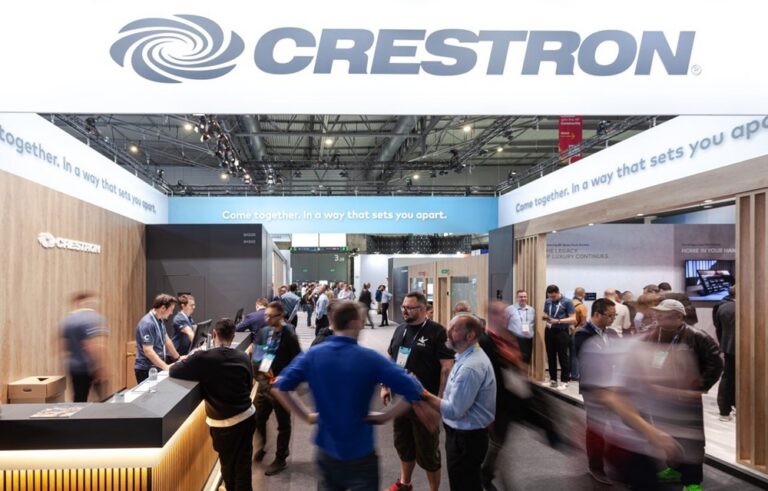
AI + Data-Driven AV – Multi-Brand Perspective
Across ISE 2026, AI and data-driven AV have emerged as central themes, signaling a broader shift in the industry from reactive support models to predictive, intelligent systems. Crestron is among the companies emphasizing how AI can reduce friction, improve system reliability, and deliver more consistent collaboration experiences at scale — an approach echoed by several other exhibitors this week.
Rather than positioning AI as a standalone feature, many AV leaders are focusing on how data can be used to understand space utilization, anticipate issues before they disrupt users, and inform smarter design and operational decisions over time.
As hybrid work and experience-driven environments continue to evolve, this data-centric mindset is positioning AV as a strategic layer within the enterprise, enabling organizations to optimize performance, scale more efficiently, and design environments that better support how people actually work.
Much like we saw at CES, AI is also everywhere at ISE 2026. Some in the loud, buzzword-heavy ways you might expect but we’re also seeing AI show up as a practical tool. Embedded across hardware, platforms and software stacks to solve problems in the background.
Use of AI in this context is being leveraged to streamline work flows, automate decisions, and remove friction from increasingly complex systems. This is a key trend because complexity has become one of the industry’s biggest hurdles and liability.
While integrators have spent years building value by managing and fixing complexity, today’s customers aren’t interested in the problem-solving, they want integrated solutions that are simple, scalable, and just work. The irony here is that AI does introduce new risks around security, data governance and compliance and so, out of ISE and into 2026, cybersecurity is going to become a critical feature that very few markets, but everyone depends on.
Day 3 at ISE 2026: Convergence, Design, & the AI Reality Check (Thursday, Feb. 5)
As ISE 2026 moved into its second full day, the conversation shifted further away from headline-grabbing product debuts and toward harder questions around how systems are designed, governed, and experienced over time. Across keynotes, panels, and show-floor coverage, themes of intentional AI use, true interoperability, and human-centered design continued to surface as defining signals.
The AI Reality Check
AI remains everywhere at ISE 2026, but Wednesday’s keynote from Sol Rashidi reframed the discussion in important ways. Rather than focusing on what AI can do, Rashidi challenged the industry to think more critically about how and why it should be applied.
She described AI not as a magic switch, but as a discipline; powerful when used intentionally and wasteful when treated as a shortcut. Rashidi pointed out that many AI initiatives stall or fail at the proof-of-concept stage because teams begin with the tool instead of the problem. Her message was firmly human-centered: AI should amplify people, not replace them, and governance must include a “human in the loop,” especially as AI becomes embedded in daily operations.
That perspective echoed beyond the keynote stage. AVI-SPL announced an executive advisory engagement with Rashidi aimed at helping integrators move from experimentation to disciplined, enterprise-ready AI strategies that prioritize outcomes, governance, and long-term value.
The Smart Building System Is Still Broken
A panel titled “The Smart Building System Is Broken” struck a familiar chord, highlighting persistent challenges around fragmented platforms, siloed data, and inconsistent integration standards. Coverage in the ISE Show Daily noted that many organizations continue to deploy connected technologies without first aligning on outcomes, interoperability, or governance, resulting in systems that collect data but deliver limited operational or user value.
One panelist remarked that after more than a decade of attending smart building conferences, the core challenges remain largely unchanged. From Caster’s perspective, this rings true. Through more than 13 years of work with the Z-Wave Alliance, we’ve seen how complex these environments can be—and how critical early alignment between standards, platforms, and integrators is to achieving consistent, long-term results.
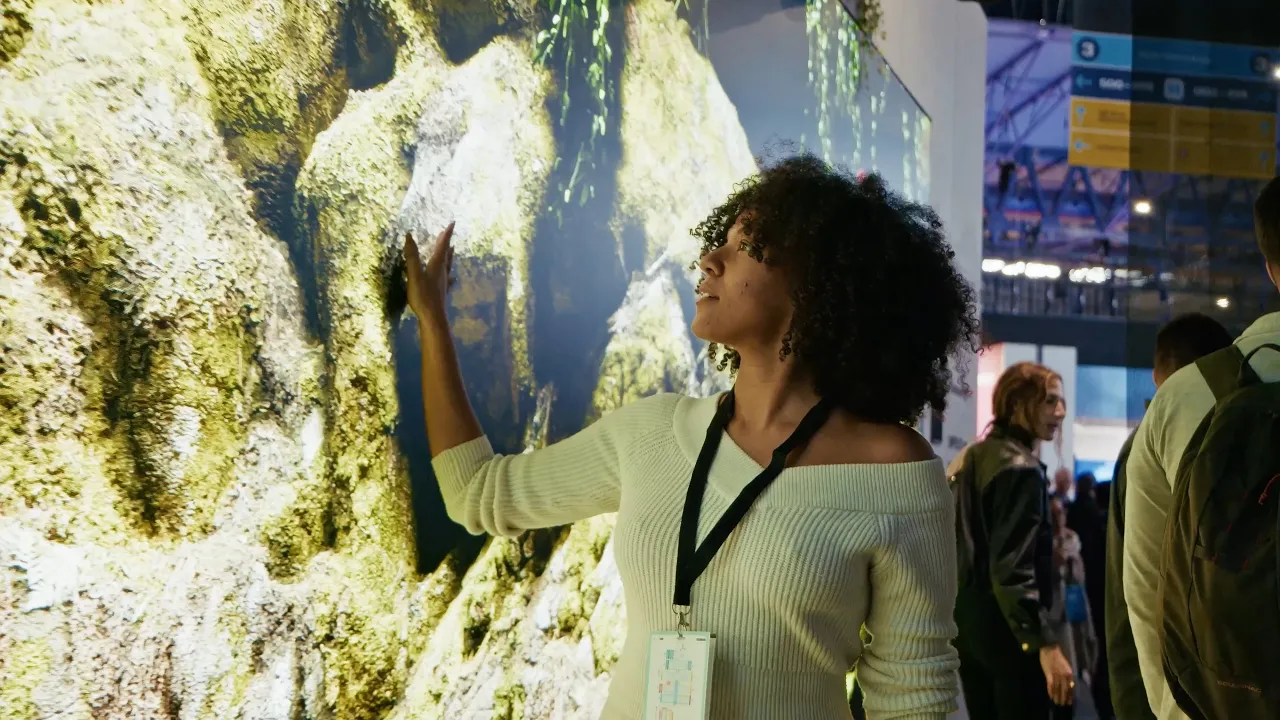
ISE’s creative energy has been on full display across the show floor, and AVIXA has captured some of the most eye-catching immersive installations and displays.
LG’s Video Wall
Dicolor’s Video Columns
Beyond Surface-Level Convergence
ISE has long been a place where commercial and residential AV influence one another. What feels different in 2026 is how deliberate that convergence has become.
Rather than borrowing features or aesthetics, both markets are increasingly shaped by shared principles: clarity, adaptability, and human-centered design. Smart homes have long adjusted to routines, occupancy, and context.
Commercial environments are now applying that same logic at scale, using AI and data to dynamically configure spaces, optimize energy use, and respond to how people actually work throughout the day.
The result is a move away from static installations toward responsive AV ecosystems, systems designed to evolve in real time rather than remain fixed after deployment.
Design and Usability as Differentiators
Across coverage and show-floor conversations, one thing became clear: design and usability are no longer secondary considerations.
Reporting from LightSoundJournal reinforced this shift, spotlighting solutions built around long-term usability, serviceability, and integration.
Modular projection systems, immersive audio platforms supported by centralized management software, and professional displays with intuitive control interfaces stood out, not as one-off showpieces, but as thoughtfully engineered systems designed for life after installation.
As the AV industry matures, buyers are increasingly evaluating solutions based on how reliably they perform in real-world conditions and how seamlessly they fit into existing environments.
Whether in smart buildings, collaboration spaces, or hybrid workplaces, value is now defined by simplicity, reliability, and user-centric performance.
By the end of Day 3, the message was consistent: the most successful technologies at ISE 2026 are those that balance innovation with practicality, and treat design and usability as core decision drivers, not afterthoughts.
ISE Takeaways
#1: Build the Standards You Want to See in the Industry
The smart building industry has been wrestling with the same problems for decades: fractured governance and incomplete interoperability lead to poorly defined or immeasurable outcomes. Everyone sees the potential for smart buildings to deliver operational value, but remains stuck on execution.
This is exactly the kind of problem that standards are good at solving. This year, the HDBaseT Alliance celebrated 15 years of HDBaseT Technology. This proprietary standard – governed by a broad industry consortium – has become the foundation for innovation across the industry. The awe-inspiring immersive video and mission-critical visual communication networks we see today exist because we don’t have to worry about how to transport high-definition video reliably and cost-effectively. Technical standards are the foundation upon which companies can build real value.
Returning to the question of smart buildings: if you want to see progress on interoperability, build, adopt, and promote interoperability standards. For example, through collaboration, rigorous testing, and continued technological innovation, Z-Wave Alliance has built a global ecosystem of hundreds of millions of interoperable devices with full backwards compatibility. Now, that already-thriving ecosystem is expanding, with the catalog of commercial-ready Z-Wave Long Range (ZWLR) devices topping 100 certified products.
That momentum is starting to show up on the show floor. Companies like Nice and Legrand were showcasing new Z-Wave–based commercial products, a meaningful signal for an ecosystem long associated primarily with residential applications.
For the Z-Wave Alliance, this represents validation that interoperable, standards-based approaches can scale into commercial environments when reliability, backward compatibility, and ecosystem maturity are already in place. These kinds of deployments create real proof points for broader commercial adoption and open doors that proprietary, siloed approaches often struggle to unlock.
“The trend I’m seeing resonate most strongly with our customers is the demand for scalable, unified solutions that work across all kinds of spaces.”
Adopting existing standards is good. Actively engaging with standards organizations and industry consortia to direct their future and promote adoption is better. Active participation helps ensure those standards will continue to meet your needs, preventing future fragmentation and strengthening the foundation you rely on.
#2: AI Can’t Be Both the Problem and the Solution
Looking at the marketing materials and news coverage out of both CES and ISE, you’d be forgiven for thinking the number one question on customers’ minds is “how do I make sure I’m using as much AI as possible?” Why else would there be so much emphasis on automated AI features that are invisible to users, or even questionably categorized as AI?
Customers don’t have an AI quota to fill. As Crestron’s Joel Mulpeter told Wayne Cavadi in an SCN interview, “The trend I’m seeing resonate most strongly with our customers is the demand for scalable, unified solutions that work across all kinds of spaces.” End users want solutions that work: AI is a “how,” not a “what.”
At ISE 2026, we saw solutions that transform doodles into diagrams during a meeting or execute AI searches in the middle of class. These products beg the question: “As an individual, you can do things very quickly with generative AI. Wouldn’t you like to do that in collaborative contexts too?” That’s a highly generalized use case: the main value it offers is “more AI at your fingertips.”
WE also saw some highly scoped AI solutions like the Jetbuilt Drawings Jetbot, which promises to help integrators create system schematics faster. Jetbuilt starts with a problem – producing drawings is tedious, repetitive, and time-consuming – then explains how their AI-powered tool addresses the challenge. The focus is on the operational value (faster drawings) not the AI.
Everyone is guilty of buzzword mania from time to time, and AI is causing real tectonic shifts in technology and culture. That said, eyes on the prize: solve your customer’s problem. Do so with AI if that’s the best method – but it’s better to be scalable, reliable, and genuinely useful than buzzy.
#3: Easy Always Wins
Why does Keurig outsell Moka pots? Why did mp3s beat CDs? Why did streaming bury Blu-Ray? Even very high-quality incumbents can be unseated by a convenient, user-friendly insurgent: Easy always wins.
The lesson here isn’t that quality doesn’t matter; it’s that accessibility matters more. A solution people can understand, self-manage, and use daily can deliver more value than a highly complex solution with every possible bell and whistle.
Vanco leaned into ease of use at ISE 2026 with the EVO-IP Go, an AVoIP solution that features automatic discovery with no control box, VLAN, or complex network configuration. EVO-IP is designed to run on a dedicated network – it’s a simple, reliable solution that makes AVoIP accessible for small-to-medium commercial applications.
Meanwhile, AutoMeasure, Crestron’s new tool for configuring multi-camera systems, tames deployment complexity for highly sophisticated collaboration environments. This feature reduces the manual measurement time required to configure an Automate VX system to 15 minutes. By prioritizing user experience – and particularly by reducing user effort – even the most sophisticated systems in the world enter a new echelon of operational value.
A Show That Matched Its Ambition
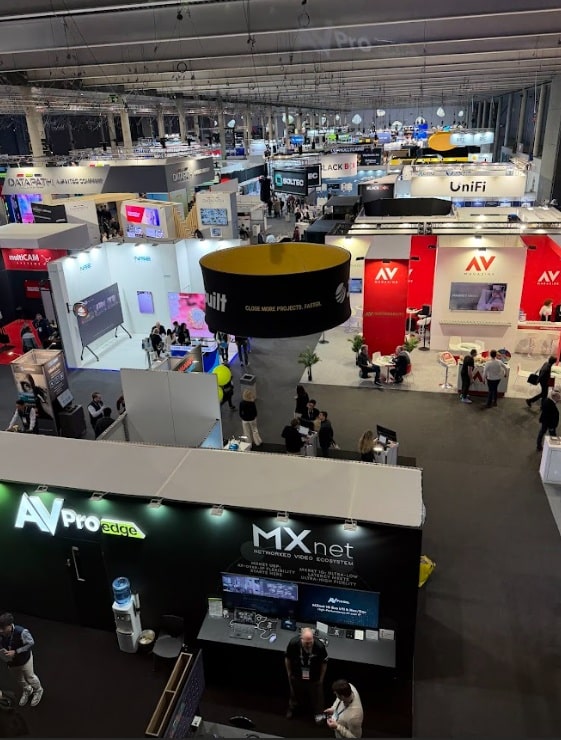
If there was any doubt about ISE’s global relevance heading into 2026, the numbers put it to rest.
ISE 2026 welcomed 92,170 visitors from around the world, setting a new attendance record and underscoring the event’s role as the most internationally representative gathering in the AV and systems integration industry. The show floor expanded to 101,000 square meters across all eight halls at Fira de Barcelona Gran Via, the largest footprint in ISE history, and featured 1,751 exhibitors, including 323 first-time participants, reflecting continued growth and fresh investment across the market.
Momentum built steadily throughout the week:
Tuesday: 55,156 unique attendees (+10% vs. 2025)
Wednesday: 64,198 onsite visitors (largest single day ever)
Thursday: 87,648 total unique attendance (highest cumulative day in ISE history)
Overall attendance finished up 8% year over year, but the more important signal was qualitative, not quantitative: this growth wasn’t driven by novelty alone. It reflected an industry actively engaging with harder questions around interoperability, governance, usability, and long-term value.
Need help making sense of the signal after the show floor clears?
Caster Communications works with technology brands to turn trade shows into long-term momentum, from pre-show narrative development and on-site media strategy to post-show coverage, awards positioning, and sustained thought leadership.
If you’re looking to move beyond announcements and build visibility around what actually matters to your customers, we’d love to help.
Sound like you? Let’s talk.
Note: Looking for a broader reflection on what ISE 2026 signals for brands heading into the rest of the year? Read our post-show perspective: Caster Coffee Thoughts: Reflecting on ISE 2026.