How Embedded Tech Can Leverage Events to Win
Embedded tech doesn’t sell itself at trade shows—because it’s invisible. Here’s how the right event strategy turns demos into credibility, analyst momentum, and year-long media narratives.

Adam Forziati
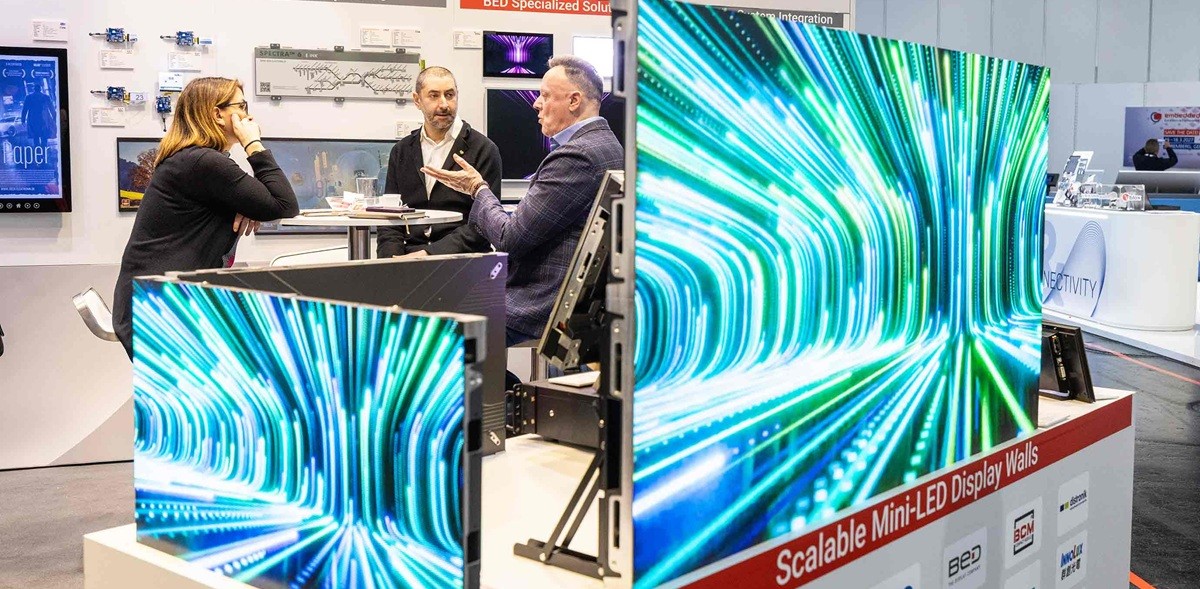
Trade shows are often treated like a coverage lottery: launch something, book a few meetings, hope the right reporter walks by, and then measure success by headlines and booth traffic.
That model breaks down fast in any tech space, but especially so in the embedded tech world.
Embedded technology is rarely the only “thing” people are there to see. It’s the thing inside the thing—an audio component, a security layer, a connectivity protocol, a silicon-level capability—that makes a product better, safer, faster, or more reliable. If you don’t plan for that reality, your technology may help power a story, but elude the spotlight.
For embedded brands, events can power meaningful relationship and agenda-setting moments. This is only achievable when you treat a trade show as what it really is: an education campaign compressed into a week, a credibility accelerator for analysts and journalists, and the beginning of your narrative calendar; not the end of your PR push.
Embedded Event Selection Is Positioning
Embedded technology cuts across verticals: audio, automotive, industrial IoT, cybersecurity, smart home, healthcare, energy, and more. Each of those worlds has its own trade shows, media ecosystems, analyst firms, standards bodies, and partner networks.
So, the event plan can’t start with “What’s the biggest show?” It has to start with a more basic question: Which audience are we trying to educate, and who influences them?
For embedded brands, event selection is really audience selection. Are you trying to reach electronics engineers? OEM decision-makers? Ecosystem partners? Do you need consumer-tech press to understand the enabling layer behind a device category? Are analysts shaping narratives you need to be included in: security, interoperability, AI at the edge, low-power design, battery-free innovation?
When you choose the right event, you’re buying proximity to the people who define what matters next.
Caster helps embedded tech teams make that choice with intent, matching events to vertical strategy, market-entry goals, and the specific journalists and analysts who will shape the year’s narrative.
The goal isn’t “be everywhere.” It’s to pick the moments where your message can land, stick, and repeat.
Exhibiting at InfoComm 2026? Caster can help.
The Real Product at a Trade Show Is Education
In embedded, adoption is everything. Analysts and journalists may love performance metrics and engineering breakthroughs, but what makes a story “real” is proof that the market is moving: ecosystem depth, certification momentum, shipping deployments, credible partners implementing the capability, and a believable path from concept to integration to end product.
That’s why trade shows work for embedded companies. They concentrate education opportunities into a short window. They give you a moment to catch up existing ecosystem stakeholders who can’t track every advancement, introduce your next phase to potential partners, and put press and analysts in front of a narrative they can repeat accurately.
Unlike cold outreach, events offer a built-in advantage: the audience is already there and already curious. But that only works if you show up with a story built for education, not just promotion.
Why Demos are Harder (But Matter More)
End devices are simple to demo: show what it is, how it works, and why it’s better.
Embedded technology is different. Often, what you’re showing is a reference design, a proof-of-concept, a platform improvement that enables future products, or an invisible layer that only becomes obvious when something goes wrong.
Thus, the demo can’t just be a demo, it has to be a story.
A strong embedded demo answers four questions quickly:
What this enables
Why it matters now
How it’s different
What the proof point is (adoption, partners, performance, or a risk avoided)
If those pieces aren’t baked in, you run the risk of journalists and analysts filling in the blanks themselves, or focusing on the most visible object in the room and miss the enabling layer entirely.
This is where embedded teams often get stuck. Engineering builds an impressive capability, but translating it into a repeatable narrative—one that other people can describe accurately—takes deliberate communications work.
That’s a big part of what Caster does around events: turning technical truth into editorial clarity, shaping demo walkthroughs, and building language that reduces misinterpretation.
Three trade show messaging traps that kill momentum
Events create momentum, but they also create risk. In embedded tech, a few common traps can undo the value of a show:
Assuming too much
Events attract mixed audiences. Some people need a quick reset on fundamentals, and if you skip that, they’ll map your story incorrectly.Blurring timelines
Embedded companies often show future-forward capabilities, and press can misread that as “shipping soon.”Letting the partner product steal the spotlight
A journalist comes to see the headline device, your technology enables it, and the resulting story becomes “New Device X.” Your embedded layer disappears or becomes a footnote.
Agenda-Setting Happens After the Floor Closes
A show’s official programming won’t reliably give you the platform you want. Even when you do everything right, you might not land the keynote slot or the panel acceptance that would make your week feel complete.
Embedded tech brands can’t afford to let that define their visibility.
Related: The Trade Show Support You Need – For CES and Beyond
Some of the most effective event strategies include owned moments that run alongside the show: private briefings, invite-only demos, small roundtables, fireside chats, partner receptions, ecosystem meetups, or “office hours” with executives.
Controlled environments for education, relationship-building, and narrative clarity create follow-on storylines that carry into the rest of the year, which is where agenda-setting actually proves itself.
If your tech is “inside everything,” your event strategy has to be built for attribution and adoption
Embedded brands don’t lose at events because their technology isn’t impressive. They lose because the value is invisible without education, demos aren’t framed as stories, timelines get misunderstood, partners get the credit by default, and post-show follow-up isn’t structured to sustain momentum.
Caster can help you turn trade shows into year-long visibility. We help embedded tech companies:
translate complex demos into story-driven walkthroughs that press and analysts can repeat accurately
secure and run analyst and journalist briefings that shape coverage calendars
create the assets and visuals needed to make invisible tech tangible
protect attribution while celebrating partners and ecosystem wins
execute post-show follow-up that turns meetings into ongoing momentum
If you want your next event to produce more than booth traffic and a week of mentions, let’s talk.